
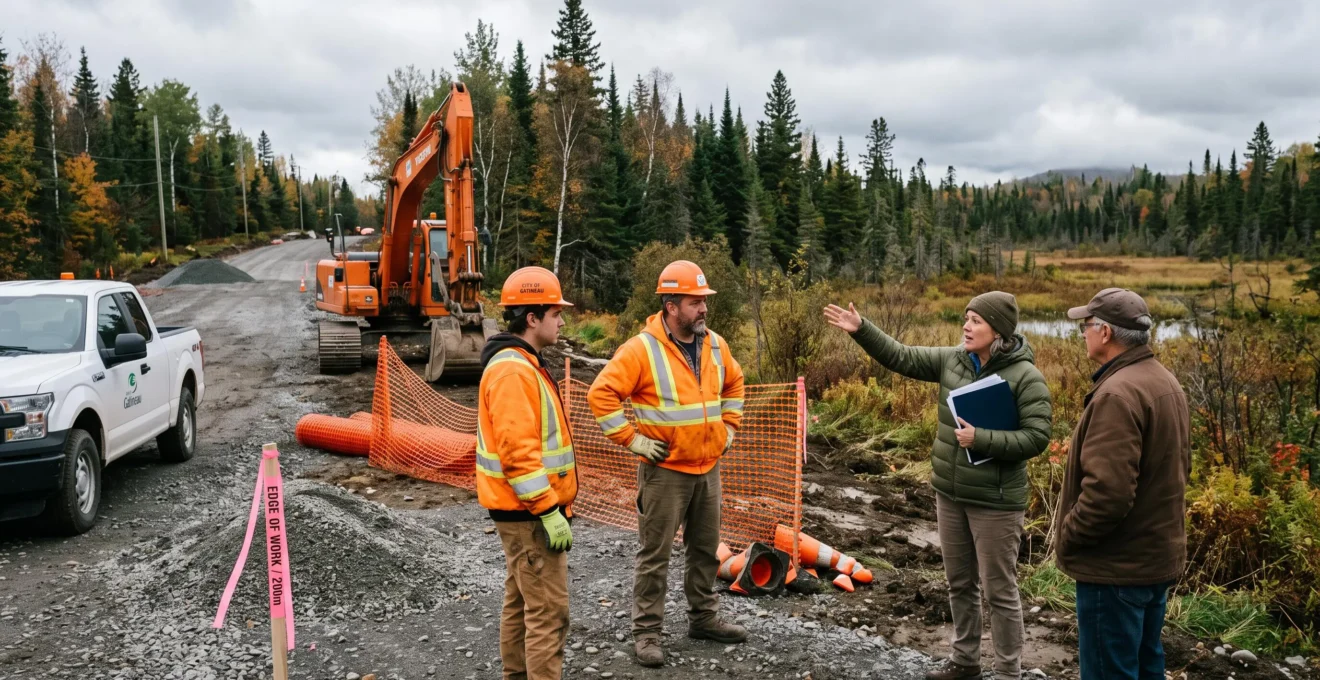
In Canada, reconciliation with Indigenous peoples is not solely about commemorations or national debates. It can also shape how a roadway is planned, how a site is selected, how public infrastructure is designed, or how an economic partnership is negotiated. When a decision affects lands, resources, rights, or sites of cultural significance, identifying the relevant communities and initiating dialogue early can influence project choices, timelines, and conditions.
Understanding these dynamics requires distinguishing between First Nations, Inuit, and Métis, recognizing the nuances of the terminology used, and not confusing administrative permits with the completion of all necessary discussions. Responsibilities vary depending on the territory, legal framework, nature of the project, and parties involved. It would therefore be misleading to treat all situations as if they were governed by a single rule.
A respectful approach begins with practical due diligence: identifying the nation involved, consulting its official information, understanding applicable obligations, and recognizing its right to participate in decisions that affect it. These practices not only provide a more accurate assessment of risk, but also help build more balanced relationships with local communities and institutions.
Key Principles for Local Action
- A project may require engagement with Indigenous peoples or communities even when regulatory approvals have already been granted.
- First Nations, Inuit, and Métis have distinct histories, institutions, and legal realities; the appropriate point of contact depends on the local context.
- Thorough preparation relies on credible sources, verification of applicable obligations, and dialogue initiated before decisions are finalized.
- Why can an infrastructure project be delayed by a territorial issue?
- How can you learn about Indigenous realities without falling into stereotypes, in a single evening?
- First Nations, Inuit, and Métis: What differences explain such distinct contexts?
- The terminology mistake that can close doors: Confusing identity, status, and community
- When and how can you attend an Indigenous cultural event respectfully, without appropriation or pretense?
- How can you prepare for a first meeting with an Indigenous community without missteps?
- How can you assess your project vulnerability in 60 minutes using 3 credible sources?
- Why can a partnership with an Indigenous community succeed… or fail at the very first meeting?
Why can an infrastructure project be delayed by a territorial issue?
An infrastructure project can be delayed when it raises questions regarding land rights, consultation, environmental impacts, or the protection of a site of significance to an Indigenous community. Obtaining a permit does not necessarily resolve all of these issues: applicable duties depend on the project, the territory, and the public decisions at stake. Late-stage dialogue can therefore lead to revised plans, altered implementation conditions, or schedule adjustments.
In Canada, several factors can prompt discussion or legal challenges: lands with unresolved title claims, treaty rights, the impacts of infrastructure on traditional land use, the protection of heritage sites, or the negotiation of an Impact and Benefit Agreement (IBA). Depending on the parties and the project, such agreements may include provisions for training, local employment, or economic benefit-sharing. However, not every expectation should be characterized as an automatic statutory duty: legal obligations, existing commitments, and negotiated commercial requests must be clearly distinguished.
The United Nations Declaration on the Rights of Indigenous Peoples Act, passed by the federal Parliament in 2021, provides a framework for the federal implementation of the Declaration and mandates the creation of an action plan developed in consultation and cooperation with Indigenous peoples. Free, prior, and informed consent (FPIC) is a foundational principle of the Declaration. Its application and legal effects must nonetheless be examined in light of the specific context: this legislation does not replace the review of applicable federal, provincial, or territorial laws.
For local residents, a dispute or protracted consultation can have secondary effects. Delays in road construction, water mains, or public facilities can postpone anticipated services or alter public project costs. This does not mean an Indigenous community is solely responsible for the delay: initial engineering choices, government administrative timelines, inadequate baseline studies, and ongoing negotiations can all contribute to the outcome.
Before characterizing a delay as obstruction, it is useful to verify three core elements: what territory is involved, what rights or agreements are implicated, and which authority has made or must make the decision. The United Nations Declaration on the Rights of Indigenous Peoples Act serves as a key reference for understanding the federal framework, without negating the need to evaluate project-specific requirements.
The central question is not merely why work has paused, but rather when these considerations should have been identified. Conducting early territorial analysis helps integrate necessary dialogue into core project planning rather than treating it as an unexpected disruption.
This approach avoids reducing a complex situation to a simple dispute between a construction site and a community. It also lays the groundwork for a clearer understanding of historical and contemporary realities, which is vital for learning about Indigenous contexts without relying on stereotypes.
How can you learn about Indigenous realities without falling into stereotypes, in a single evening?
A single evening can provide a solid foundational understanding if it draws on three balanced perspectives: an authoritative institutional source, an Indigenous news organization, and content created directly by Indigenous authors or community organizations. The objective is not to master diverse histories and legal systems in a few hours, but to identify primary contexts, recognize knowledge gaps, and know where to look for credible follow-up sources.
Begin with the Truth and Reconciliation Commission of Canada. Its documentation of the residential school system and its 94 Calls to Action explain why reconciliation encompasses institutions, education, governance, culture, and relationships between nations. The government publication of the Truth and Reconciliation Commission of Canada Calls to Action serves as an authoritative foundational document rather than a substitute for diverse Indigenous viewpoints.
Next, dedicate time to a news outlet that covers Indigenous affairs in depth, such as APTN or CBC Indigenous. Select a contemporary issue—such as education, housing, land stewardship, language revitalization, or economic development—and examine how it is framed. Look for commentary from directly affected community members, verifiable facts, and clear distinctions between reporting, analysis, and opinion. A single journalistic story cannot capture the full diversity of all communities.
Finally, engage with a resource produced by an Indigenous nation, organization, or author. An official community website often details governance priorities, history, and engagement protocols; a memoir, creative work, or essay can offer nuanced insights that administrative reports rarely convey. Respect the context in which material is published, and avoid treating one individual’s perspective as the uniform voice of all Indigenous peoples.
Three common misconceptions are especially important to dismantle. The first is believing that historical injustices exist solely in the past: their institutional, social, and cultural impacts continue into the present day. The second is assuming Indigenous peoples form a single homogeneous group, whereas languages, oral traditions, governance structures, and territorial rights are highly distinct. The third is reducing legal status to a broad personal advantage, overlooking its complex legal history, statutory restrictions, and structural limitations.
An evening of learning becomes truly valuable when it translates into local awareness: identifying the nations connected to the land where you live or work, reading their public updates, and supporting community-led initiatives. Information is a starting point, not proof of expertise or authorization to speak on behalf of others.
Once these sources are placed in perspective, understanding the distinctions among Indigenous peoples becomes critical: it explains why an approach or framework that applies in one context cannot simply be transposed to another.
First Nations, Inuit, and Métis: What differences explain such distinct contexts?
First Nations, Inuit, and Métis are the three distinct Indigenous groups recognized in the Canadian constitutional framework and national census data, but they do not form a single, uniform population. Their histories, ancestral lands, governing institutions, languages, and rights are unique. For local decision-making, identifying the specific nation and community involved is an essential step: consultation, negotiation, or collaboration cannot be effectively managed by addressing an abstract entity labeled “Indigenous peoples.”
First Nations comprise hundreds of diverse nations and communities, with legal realities that vary widely depending on historic treaties, modern land claims, regional agreements, and applicable statutory regimes. The Indian Act governs certain reserve lands and legal status rules, but it does not represent the entirety of First Nations governance. Powers, jurisdictions, and government-to-government relationships are shaped substantially by individual treaties and self-government agreements.
The Inuit are the Indigenous people of Inuit Nunangat, the traditional homeland encompassing four regions: Nunavut, Nunavik, Nunatsiavut, and the Inuvialuit Settlement Region. The regional institutions, modern comprehensive land claims, and geographic conditions of these territories directly influence public services, infrastructure planning, and environmental co-management. Decision-makers must engage with these distinct regional bodies rather than transposing models designed for southern First Nations reserves.
The Métis are a distinct Indigenous people emerging from historic communities with their own collective identity, culture, and governance traditions. Their representative organizations, Section 35 Aboriginal rights, and self-government agreements vary across jurisdictions. The presence of a regional Métis organization does not mean it automatically represents all individuals of Métis heritage, nor is it necessarily the sole representative body for a specific initiative.
Demographic figures can help situate these realities, provided they are not conflated with legal definitions or community citizenship criteria. Individuals identifying as Indigenous according to the 2021 Census: 1,807,250 people in 2021 in Canada. This figure reflects a specific census methodology and survey period; it does not, on its own, describe individual community demographics. The Statistics Canada portal dedicated to Indigenous peoples statistics provides valuable contextual data.
For local initiatives, the practical takeaway is direct: the appropriate leadership body depends on the specific territory, the subject matter, applicable agreements, and the legally designated governing authorities. A municipality planning an infrastructure consultation cannot simply rely on a contact list compiled for a project elsewhere, even within the same province.
Identifying the correct community is only the first step: the language used to describe it, along with the careful distinction between personal identity, legal status, and institutional affiliation, is equally vital to building constructive relationships.
The terminology mistake that can close doors: Confusing identity, status, and community
A common error is treating Indigenous identity, legal status, and community affiliation as interchangeable concepts. While these notions sometimes overlap, they are not equivalent. In professional communications and meetings, using accurate terms, adopting the official self-designation of the nation, and relying on publicly available guidance demonstrates respect and thorough preparation without putting individuals in the position of having to justify their identity.
Indigenous identity encompasses personal, familial, cultural, and collective belonging, and how it is lived and expressed cannot be reduced to a single bureaucratic label. Registered Indian status, by contrast, is a specific administrative category defined under the federal Indian Act.
It does not encompass all Indigenous identities: Inuit and Métis individuals, for example, are not defined by this statutory registration. The legal provisions associated with status depend on specific sections of the Act and established case law.
Community or band membership represents a separate legal and social concept. Many communities determine their own membership codes, while others fall under federal registrar rules or modern treaty frameworks. An individual may identify as Indigenous without holding federal status, and membership criteria differ across nations. It is inappropriate to assume a person’s legal status based on physical appearance, surname, place of residence, or public involvement.
In professional settings, use the official name that the nation or organization chooses for itself. If clarification is needed, review its official website, consult public governance documents, or politely inquire about appropriate terminology for the matter at hand. Outdated statutory or historic terms should not be used in everyday conversation. Furthermore, colleagues and partners should not be asked to prove their identity or disclose personal background unnecessary to the purpose of the meeting.
Care is equally essential when a business seeks to market a product, event, or initiative as “Indigenous.” Claiming such a designation, implying community affiliation, or using traditional names and symbols without explicit authorization or partnership agreements can mislead the public and cause significant reputational harm. Legal implications depend on applicable consumer protection, trademark, and intellectual property laws, as well as the specific representations made.
The operational rule is straightforward: distinguish between personal self-identification, statutory legal definitions, and the official representative mandate of an organization. When in doubt, confirm the naming conventions and engagement protocols published by the community before issuing an invitation, proposal, or public statement.
Respect is demonstrated outside formal boardrooms as well. Cultural events offer meaningful opportunities to learn, provided attendees respect the boundaries established by community hosts and organizers.
When and how can you attend an Indigenous cultural event respectfully, without appropriation or pretense?
Attending Indigenous cultural events is welcomed when organizers explicitly open them to the general public and outline expectations for visitors. National Indigenous Peoples Day on June 21, Orange Shirt Day (National Day for Truth and Reconciliation) on September 30, along with open pow-wows, festivals, and museum exhibits, provide valuable learning environments. However, every event must be evaluated individually: sacred ceremonies or internal community gatherings may be reserved for members and not open to outside visitors.
The first step is verifying the organizer. Look for events hosted, sponsored, or formally endorsed by an Indigenous community or recognized organization. A commercial event that uses Indigenous aesthetics does not necessarily involve genuine community participation. Event notices, official websites, and host guidelines usually outline admission details, expected conduct, and any protocols regarding specific spaces.
The distinction between cultural appreciation and appropriation does not mean avoiding Indigenous culture altogether. Attending an open celebration, listening attentively to speakers, purchasing artwork directly from Indigenous makers, and following event etiquette represent respectful participation. Conversely, copying sacred patterns, wearing ceremonial items such as headdresses as costumes, or marketing crafts that imitate spiritual items crosses into cultural appropriation. Context, sacred significance, and community ownership matter deeply.
On-site, always ask permission before taking photographs or recording individuals, regalia, or ceremonies, and accept any refusal immediately. Do not touch regalia, instruments, or sacred items, and do not assume an area is open to the public simply because it is accessible. When the master of ceremonies asks attendees to stand, remove hats, or refrain from filming, comply promptly. Quiet, attentive observation is far more respectful than focusing on taking photos for personal social media.
Public events can also offer informal introductions to community members. However, avoid turning a cultural gathering into an opportunity for business solicitation or pitching projects. If a professional connection seems valuable, wait for an appropriate business context, introduce your organization without pressure, and respect the other party’s decision if they choose not to follow up.
Meaningful attendance centers on active listening and adhering to the protocols established by the hosts. Attending a public event does not grant access to private cultural domains, confer authority to speak on cultural matters, or substitute for formal institutional consultation.
These practices provide a foundation of respect, but meetings concerning infrastructure, resource management, or business projects require a different standard of preparation: identifying the legitimate leadership, understanding local protocols, and committing to an enduring dialogue rather than seeking quick sign-off.
Key Considerations for Professional Initiatives
- Identify the nation and community through its own official publications rather than relying solely on general territorial maps.
- Frame outreach around clear project goals and open decision points, rather than presenting a finished proposal for rubber-stamp approval.
- Allocate adequate time, administrative resources, and appropriate compensation when requesting specialized knowledge or technical reviews.
How can you prepare for a first meeting with an Indigenous community without missteps?
Preparing for an initial meeting involves identifying the correct community, understanding the territorial and legal context, and confirming who holds the representative mandate for the matter under discussion. Reviewing public documentation on the nation’s priorities, existing treaties, and consultation protocols is essential, as is presenting the project with genuine flexibility on open design points. Arriving with finalized plans and asking for pro forma endorsement erodes trust from the very first interaction.
Begin by identifying which nation or nations have rights and interests connected to the area. Territorial maps offer a preliminary orientation, but they cannot replace primary information from the communities themselves, nor can they determine title, treaty boundaries, or specific consultation requirements. Consult official community websites, governance reports, and published consultation protocols. The goal is to accurately identify all relevant rights-holders, not merely to select the entity whose response seems most convenient to secure.
Next, confirm the authority and role of your proposed contact. A band council, Inuit government body, regional Métis office, tribal council, or designated department lead may manage specific project reviews, but no single entity handles all topics uniformly. The appropriate point of contact depends on the community’s internal governance and the nature of the request. If the correct path is unclear, make a neutral administrative inquiry about the formal engagement process rather than making assumptions about representative authority.
In your initial letter or introduction, state clearly who you are, what entity is leading the project, the primary objectives, and which project decisions remain open to modification. Note any regulatory or statutory deadlines, but do not impose an arbitrary corporate timeline on the community’s internal processes. Deliberative practices and community protocols operate differently from standard municipal or corporate calendars. A rapid turnaround should not be assumed, nor should a period of deliberation be interpreted as disinterest or refusal.
Reciprocity must be tangible. Listening before proposing, sharing project documentation well in advance, designating a consistent organizational contact, and valuing the time invested in dialogue are foundational practices. When requesting expert feedback, participation in working sessions, or formal technical reviews, discuss honoraria, capacity funding, or professional fees upfront. Expecting extensive input without compensation unfairly shifts project overhead onto the community being consulted.
Conversely, certain practices undermine relationships: pressing for immediate commitments, reaching out to multiple contacts to bypass established channels, making unsubstantiated economic promises, or announcing a partnership publicly before it has been formally concluded. If disagreement arises, record the unresolved points and agree on how and when to resume dialogue. A productive first meeting is not measured by immediate approval, but by mutual clarity on concerns, governance roles, and next steps.
Pre-Meeting Preparation Checklist
- Identify the relevant nation and lands, recording official sources and contact details in a reference file.
- Compile project briefings, known agreements, and published community protocols into a dated preparation binder.
- Confirm the mandate of your primary contact and document the official process for project correspondence.
- Draft an introductory briefing that clearly separates fixed constraints from open, negotiable elements and topics for discussion.
- Prepare a follow-up outline designating a project lead, planned document deliveries, next milestones, and proposed compensation terms for requested expertise.
The outcome of this preparation is not an assumed endorsement: it is a well-structured dossier that enables an open, transparent first discussion. It maps out confirmed facts, uncertainties, and genuine areas where community input can shape project outcomes.
Once baseline information is assembled, the next step is assessing your project’s specific exposure. This diagnostic helps determine where to focus research, which priorities to address first, and when specialized advisory support is required.
How can you assess your project vulnerability in 60 minutes using 3 credible sources?
You can complete an initial risk screening in 60 minutes by examining three core dimensions: project reliance on specific lands or resources, applicable legal and consultation duties, and the gap between completed outreach and outstanding procedural steps. This method provides an initial diagnostic rather than formal legal advice or proof of statutory compliance. When project activity overlaps with traditional lands without prior dialogue, the priority is verifying legal requirements and initiating early discussions.
Vulnerability in this context refers to the risk that a project, public initiative, or municipal decision faces delays or challenges because territorial rights, consultation requirements, or community relationships were not anticipated. Risks can be regulatory, relational, reputational, or schedule-driven. A project is not inherently flawed simply because it intersects with Indigenous lands, but an absence of early analysis often prevents timely identification of critical duties.
Step One: Map project dependencies. Record the project location, required natural resources, access corridors, potential environmental zones of influence, and communities identified in preliminary research. Separate verified data from working assumptions. A general map provides broad spatial context, but it does not establish the legal boundaries of Aboriginal title, treaty rights, or procedural consultation duties.
Step Two: Verify applicable obligations. Review administrative guidelines and regulatory frameworks corresponding to the project type and location. Determine which public decisions or authorizations are triggered, whether environmental assessments or formal consultation processes apply, and which government body has jurisdiction. Duties differ significantly across federal, provincial, territorial, and municipal jurisdictions. A conclusive determination requires a contextual review of statutory provisions, historic agreements, and facts on the ground.
Step Three: Identify procedural gaps. Compare actions completed to date with those required by the regulatory and legal context. Simply sending an email or holding an informal introductory meeting does not demonstrate that consultation duties have been fulfilled. Evaluate when community contacts were initiated, what technical information was shared, what concerns were raised, and how those concerns influenced project design.
To ensure a balanced assessment, triangulate three information sources: official government and regulatory documentation, published materials from the affected nation or organization, and documented case studies from comparable regional projects. Government guidelines outline regulatory standards, the community articulates its rights and priorities, and past projects illustrate practical implementation challenges. No single source provides a complete picture on its own.
At the conclusion of the hour, categorize identified risks by nature and urgency: legal, relational, reputational, and schedule. For each risk, note the confirmed facts, information gaps, responsible team member, and immediate next action. If a community appears to be affected but has not been contacted, do not jump to legal conclusions; prioritize verifying requirements and opening dialogue before finalizing irreversible commitments.
This diagnostic transforms general uncertainty into a concrete action plan. It is particularly effective when followed by long-term engagement that involves the community in shaping decisions rather than seeking feedback at the final hour.
Why can a partnership with an Indigenous community succeed… or fail at the very first meeting?
A partnership is far more likely to succeed when a community is engaged from the conceptual phase, project scope and limitations are transparent, and economic opportunities are discussed with concrete specifics. Conversely, it is quickly compromised if the initiative is developed in isolation and presented as a virtually finalized plan. An initial meeting cannot guarantee an agreement, but it reveals whether both parties are genuinely committed to building an authentic relationship and adapting their positions.
A sustainable partnership goes beyond financial donations or basic regulatory consent. Depending on the initiative and negotiated terms, it may encompass local hiring, specialized training, procurement opportunities, joint governance, revenue sharing, or equity participation. In resource and infrastructure sectors, Impact and Benefit Agreements often structure these arrangements. Terms must align with community priorities, the governing legal framework, and commercial feasibility; there is no universal template for an equitable partnership.
The distinction between token engagement and a constructive relationship is evident in the degree to which community input can influence core decisions. If engineering plans are set in stone, constraints are presented as non-negotiable without explanation, or meetings serve solely to secure a public endorsement, meaningful collaboration is absent. Productive dialogue clearly articulates open decision points, true technical constraints, and design modifications the proponent remains open to exploring.
Economic commitments must be concrete and measurable. Broad promises of “job creation” hold little value without details regarding job classifications, skill requirements, recruitment protocols, and retention support. A proposed training program gains credibility when it outlines specific learning objectives, allocated resources, and measurable milestones. When commitments are agreed upon, they should be documented clearly, with identified leads, agreed deadlines, and an agreed-upon mechanism for resolving disputes.
Three questions help monitor relationship quality over time:
- Does the community have meaningful influence over structural project decisions, or are they merely informed of choices already made?
- Are commitments made during discussions formally documented, monitored, and adjusted when project circumstances evolve?
- Are projected economic and community benefits grounded in verifiable plans and transparent data?
There must also be room for a community to decline participation or require substantial project redesign. Genuine collaboration cannot assume automatic approval of initial proposals. It must recognize the community’s right to highlight unacceptable impacts, evaluate alternative approaches, or conclude discussions in accordance with applicable frameworks. Listening to objections does not mean every request is automatically adopted, but concerns must be addressed thoroughly and respectfully.
The first meeting matters not because it produces immediate deals, but because it establishes the tone for ongoing collaboration: information transparency, role clarity, genuine listening, and credible commitments. Historical awareness, accurate terminology, respect for protocols, and prior risk analysis allow project teams to approach this critical milestone with clarity and integrity.
In municipal and infrastructure planning, reconciliation is demonstrated through daily working practices: verifying facts before acting, engaging authorized leadership, allocating sufficient time for dialogue, and documenting joint decisions. For upcoming initiatives, begin by identifying the territory and the nations involved, then establish a transparent, respectful engagement process tailored to the local context.
Is consultation with an Indigenous community mandatory for every local project?
No; it should not be assumed that an identical legal process applies to every project. Obligations depend on the nature of the decision, the governing authority, the potential impacts on Section 35 Aboriginal or treaty rights, and relevant statutes or agreements. A project-specific legal and regulatory review is necessary to determine precise procedural duties.
Is a territorial map sufficient to determine whom to contact?
No. A map provides general geographical orientation, but it does not define legal rights, boundary assertions, organizational mandates, or statutory consultation duties. Proponents must consult official publications from the relevant nations, review applicable governance documents, and verify responsibilities with relevant public decision-makers.
What is the difference between consultation and a partnership?
Consultation is a procedural process designed to identify, assess, and accommodate potential impacts on Indigenous rights within an established regulatory framework. A partnership is a collaborative business or operational relationship defined jointly by the parties, featuring shared objectives, clear roles, and mutual commitments. One does not automatically replace the other, and a partnership does not eliminate existing statutory consultation duties.
How can you avoid reaching out to the wrong contact during initial outreach?
Start by reviewing the official website and published guidelines of the nation or governing body, and follow their specified engagement protocols. If the mandate of an office or official is unclear, make a formal inquiry to identify the department responsible for project reviews. Avoid assuming that any single individual represents an entire community on all issues.
Should an Indigenous person be compensated when asked for expertise?
Arrangements depend on the nature of the contribution, institutional policies, and agreements between the parties. When specialized knowledge, cultural advice, or technical document review is requested, compensation should be addressed transparently at the outset rather than expecting uncompensated time. Clarifying this upfront acknowledges the professional and cultural value of the work.